
VECTOR Library
Project History
From an institutional initiative to regional leadership in vector-borne disease education.
Vector-borne Disease Team Founded
Dr. Erika Machtinger establishes the first vector-borne disease team at Penn State Extension.
VectorED Network Established
CDC names Penn State as lead institution for one of five new Vector-Borne Disease Regional Training and Evaluation Centers.
VECTOR Library First Release
Version 1.0 of the VECTOR Library launches with Cooperative Extension materials from across the United States.
Version 2.0 Grows
Version 2.0 expands the library with Public Health Agency materials, significantly growing the database.
Origins of the Vector-borne Disease Team at Penn State Extension
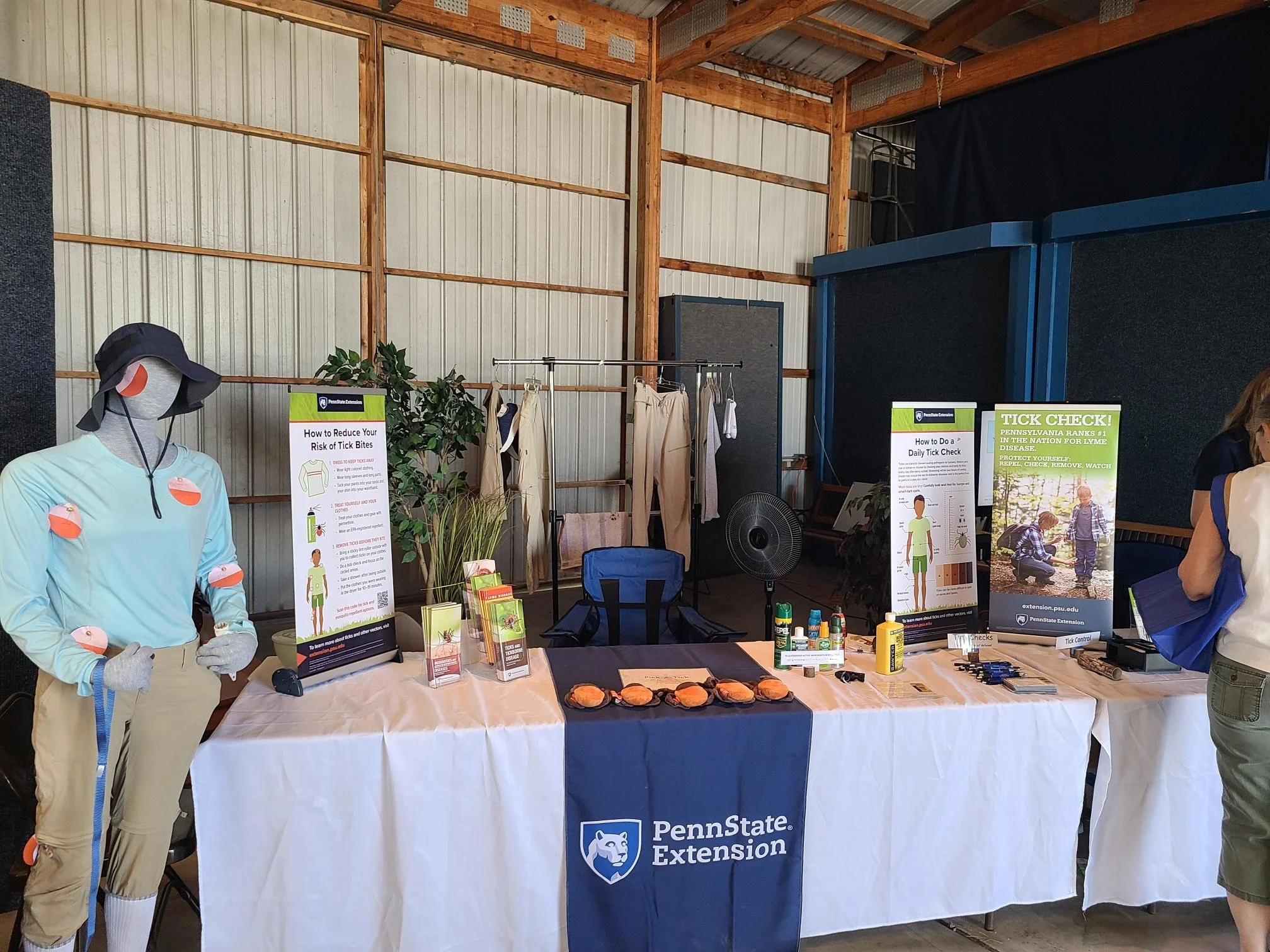 The Vector-Borne Disease Team at Penn State Extension was established in 2019 by Dr. Erika Machtinger, associate professor of entomology in the College of Agricultural Sciences. Dr. Machtinger founded the team specifically to address the escalating threat of vector-borne diseases in Pennsylvania and the surrounding region.
This pioneering initiative has been recognized nationally as the first of its kind, highlighting Penn State's leadership in addressing vector-borne disease challenges through integrated education, research, and community outreach.
Why Vector-borne Disease Education Matters
Initial Approach and Development
The team's initial approach included launching surveys to understand community needs, with the goal of delivering responsive programming to educate the public on vector-borne diseases, prevention methods, and personal protection strategies. This data-driven strategy allowed the team to develop resources that specifically addressed the knowledge gaps and concerns of Pennsylvania residents.
The team developed comprehensive educational resources and, in partnership with the Northeast Regional Center for Excellence in Vector-Borne Diseases, hosted events like the "Vector Biology Boot Camp" to provide hands-on experience for vector-borne disease professionals. These programs covered field collection and identification of medically important ticks and mosquitoes in the Northeast.
- Information about ticks and mosquitoes common in Pennsylvania
- Educational materials on vector-borne diseases
- Vector management strategies
- Public webinars and training programs
Evolution to the VectorED Network
The success and recognition of the Penn State Extension vector-borne disease team led to a significant expansion of its scope and impact. In 2023, the Centers for Disease Control and Prevention (CDC) named Penn State as the lead institution for one of five new Vector-Borne Disease Regional Training and Evaluation Centers, awarding $1.25 million in the first year, with a projected total of $6.25 million over five years. This funding established the VectorED Network.
The VectorED Network was established as a Vector-borne Disease (VBD) Training and Evaluation Center via a Cooperative Agreement with the CDC to build vector-borne disease prevention and control capacity through training, evaluation of programming, and creating partnerships with academic, federal, local, and state institutions in the Mid-Atlantic and Ohio River Valley.
The VECTOR Library
As part of the VectorED Network's mission to serve as a comprehensive resource for vector-borne disease education, the team has developed and continues to expand the VECTOR Library. This centralized repository collects trusted resources from Cooperative Extension, Public Health, and Academic institutions, making essential information readily accessible to professionals and educators.
By consolidating these diverse resources in one searchable platform, the VECTOR Library helps overcome time limitations while ensuring access to accurate, current information about vector-borne disease prevention and control.
Educational Resources
Access publications and online materials about vector species and the diseases they transmit.
Training Materials
Find ready-to-use curricula and teaching tools designed for effective vector education.
Communication Tools
Download prepared social media content and visual aids to enhance public outreach.
Public Health Resources
Obtain specialized information for health practitioners, veterinarians, and vulnerable populations.